The web changed.Your agency’s playbook didn’t.

Most marketing is still built for a web that no longer exists. I build systems for the one that does.

Search, AI answers and Google’s ads now read the same facts about your business.

Your website, your Business Profile, your reviews, and what others say about you.467

More than half of all web traffic now comes from software, not people.12

The AI crawlers among them mostly do not run scripts. They see your raw page, or nothing.9

Most marketing is still sold one piece at a time.

Ads here. A website there. Nobody checks one against the other. Nothing is broken. The pieces are just not connected.

Your business already has the stars. I draw the lines.

One system. Three jobs: be understood, be chosen, be better every month.

1 Be understood

53%of all web traffic in 2025 came from software, not people.2

8%of Google visits that showed an AI summary ended with a click on a result. Without one, 15 percent.3

What changed

Search results, AI answers and Google’s ad automation now draw on the same raw material: your website, your Business Profile, your reviews, and what independent sources say about you. The address shown in your ads comes straight from your Business Profile.7

Google tells its quality raters that when your website and reputable independent sources disagree about your business, they should trust the independent sources.6 Google also says businesses with complete and accurate information are more likely to show up in local results.10

Software reads your pages before people do, and has for a while: Imperva put it at 51 percent already in 2024.1 Most of that software is not AI yet. The AI share is small and growing fast.8 A Vercel and MERJ analysis found that the crawlers from OpenAI, Anthropic, Meta, ByteDance and Perplexity do not run the scripts many websites use to build their content.9If your words only appear after those scripts load, those readers get an empty page.

And the answer your customer reads may be written by a machine that never sends them to you.

What the old playbook still does

One person on SEO, another on ads, and nobody on the Business Profile. Three versions of your business, never checked against each other. Websites built to look good in a screenshot, with the words locked inside images or loaded late.

What I build

One checked set of facts about your business, kept in one place, feeding your website, your Business Profile, your ads and your content. Pages that make sense as plain text first. Then I design them for the person. As more of the matching and the writing is done by machines, I expect this to decide more of the result each year.(my view)

What you get

A customer, a search engine and an AI assistant all get the same answer about who you are, what you do and where.
2 Be chosen

What changed

Being found is not enough. People search, check the map, read reviews, visit your site, ask an AI assistant, and come back later through an ad. When they arrive, the page has to match what they were looking for.

Google works the same way. It says it scores how useful and relevant your landing page is when it ranks your ad, and that higher quality ads usually cost less per click.1112Its ad automation reads your landing pages to decide which searches to match and to write the ad copy.45

What the old playbook still does

It sells the ads and stops there. Many agencies tie their fee to what you spend on ads.13That fee grows when your spend grows, whether or not the calls do. Every click goes to your homepage. No page is built for the ad. Every call and form is counted in one bucket.

Run this test. Open your last report. Can it tell you which ad produced which call? If everything is counted together, calls that had nothing to do with the ads get credited to them.

What I build

One clear offer. A page built for each ad, so no paid click lands on a homepage. Tracking split by offer, so every call and form is tied to the search or ad that produced it. Follow-up, so an inquiry gets an answer. It comes as one package, with everything the campaign needs included.

What you get

Qualified inquiries, calls and consult requests, each one traced to where it came from.

3 Be better every month

What did not change

Someone has to decide what to change this week, and someone has to answer for what it did. The more of the matching and the writing the machines take over, the more that judgment is the whole job.

What the old playbook still does

Set it up once and leave it. Once a month a PDF arrives, full of numbers that do not answer the only question you have.

What I build

I track everything, so I never have to guess. A clearer offer improves the page. A better page improves the campaign. Better campaign data improves the next decision.

On ads, where things move fast, you get what I changed and why every week, in plain language, and a recorded walkthrough every month. On search and content, the report is monthly. Every client has a direct Slack channel with me and access to the Alchmy client portal for support and reporting.

I expect a system run this way to get more effective every month, because each improvement feeds the next.(my view)

What you get

You always know what was done, why, and what it changed. And you can ask me directly.

What I do

Four kinds of work, run as one system.

  • Local search. Your website, your Business Profile and your reviews, so you show up when someone nearby looks for what you do.
  • AI answers. The facts about your business stated clearly, so AI assistants have the right facts to work from.
  • Ads. One offer, one page per ad, and tracking that ties every call to its source.
  • Content. Pages that answer the questions your customers actually ask.

This site runs on the same three

  1. Be understood. The sentence in the footer is the same one in the page data and on the Business Profile. Word for word. Every page is complete before any script runs. View the source.
  2. Be chosen. One action on this page. Every message records which search or ad brought it in, so I can trace it.
  3. Be better every month. Built . Every change to this site is dated and logged.
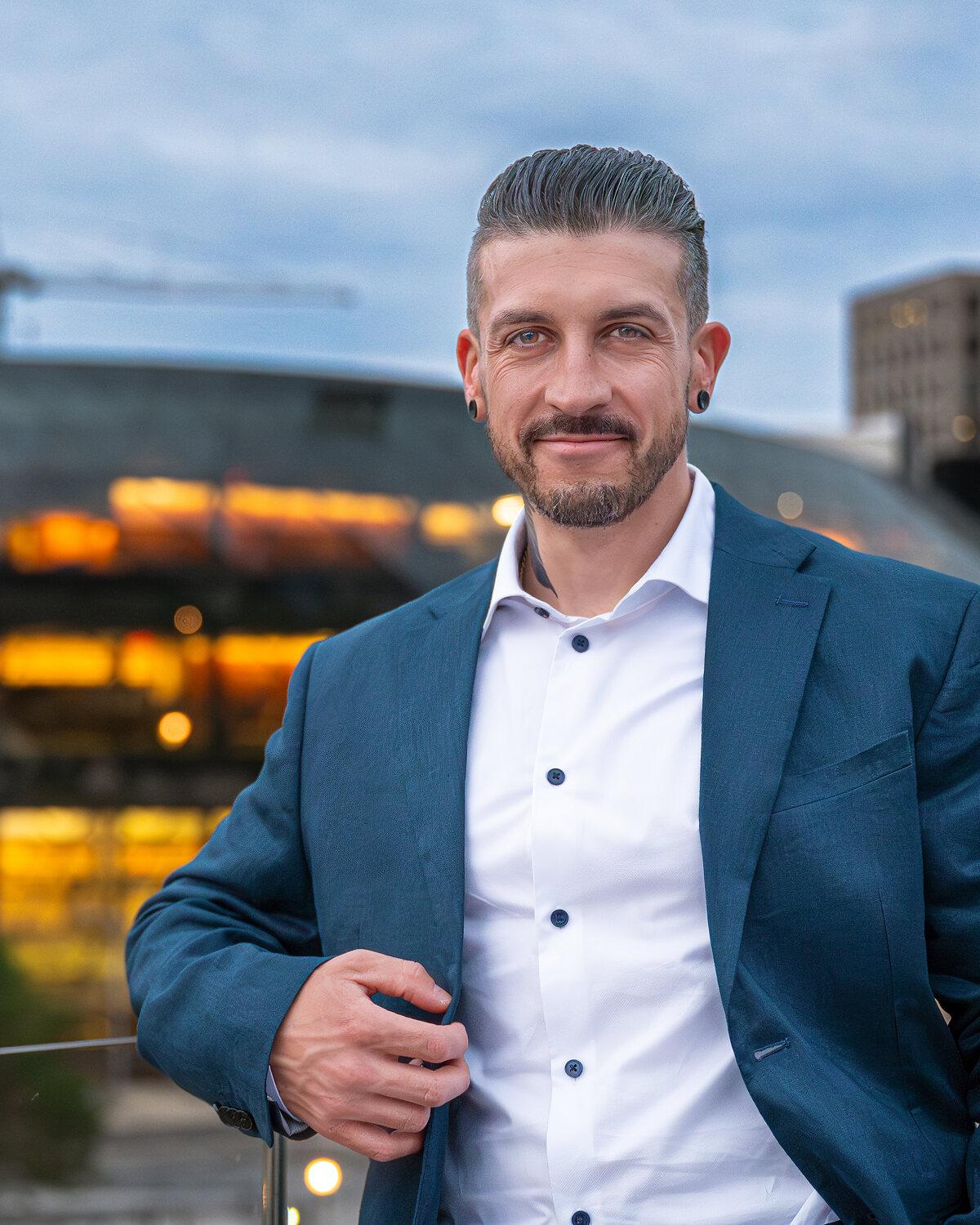
Yanick Chiasson

Yanick Chiasson

I spent my career in sales and management before I ran marketing, so I judge marketing the way an owner does: by what reaches the phone.

I trained as an electrical engineer, which is why I build systems and not campaigns. I build my own AI agents for the repetitive work, so my hours go to judgment.

I do the work in every account. No junior account managers. No hand-offs. No passing the important thinking to someone who has never spoken with you.

Co-captain of a Speakeasy Mastermind chapter. Based in Ottawa.

Who I work with

Owners of established local businesses who want to grow. I do not work with two businesses that compete for the same customers in the same area.

You have a good service and a working business. Your marketing is run in pieces, by vendors who do not talk to each other, and the reports do not answer your questions.

I do not sell extras. The small things that decide whether the work succeeds, the page, the tracking, the follow-up, are part of the system and not add-ons. That makes me more expensive than an agency’s cheapest tier. I do not offer a cheaper tier when I know it is not enough to work, and I will tell you why.

I am not the right choice if you want one campaign to fix everything in two weeks. This work is systematic. The improvements build when the system is maintained.

Tell me about your business

What you run, what you have tried, and what is not working. I do not take on two businesses competing for the same customers in the same area, so tell me your industry and where your customers come from. I read every message myself and reply within two business days.

You run a dental clinic in the Ottawa area

The 90‑Day Ottawa Dental Patient Sprint is open. One high-value procedure. Three matched paths from search to page. No paid click ever lands on a homepage. Three municipalities at the Founder Rate, one clinic per municipality.

See the Sprint

Sources

  1. Imperva, 2025 Bad Bot Report
  2. Imperva, Bad Bot Report 2026
  3. Pew Research Center, Google users and AI summaries, July 2025
  4. Google Ads Help, How AI Max for Search campaigns works
  5. Google Ads Help, About Performance Max campaigns
  6. Google, Search Quality Rater Guidelines, September 2025
  7. Google Ads Help, About location assets
  8. Cloudflare, Radar 2025 Year in Review
  9. Vercel and MERJ, The rise of the AI crawler, December 2024
  10. Google Business Profile Help, Tips to improve your local ranking on Google
  11. Google Ads Help, About ad quality
  12. Google Ads Help, Ad Rank
  13. PPCsurvey.com, The State of PPC 2026, section 6.2 (922 agencies and freelancers)